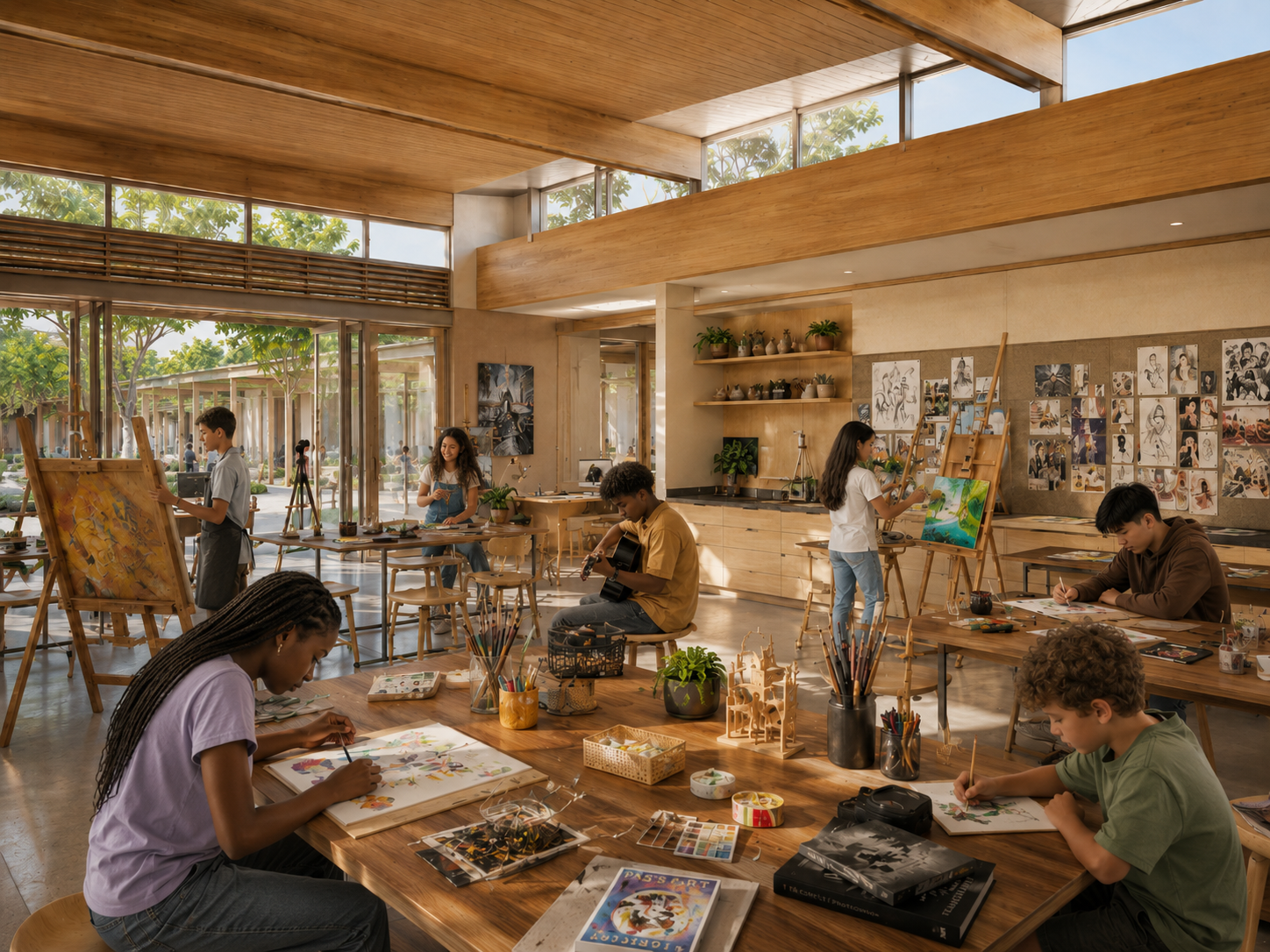
Instead of expecting every learner to progress in the same way at the same pace, we adapt the environment, the pace and the methods to the person. Here is how.
Montessori inspired.
Neurodivergent informed.
Stelaah designed.
Our learning model combines Montessori inspired environments, personalized education, creative exploration and neurodivergent informed support. We keep what works about Montessori, and build something more flexible and future focused around it.
The foundations we build on
Structure and support Montessori alone doesn't provide
How we enhance the learning experience
Personalized Learning
Every learner begins with an individual profile of their strengths, interests, challenges and preferred ways of learning, used to build a personalized plan with the right goals, support and teaching methods.
Visual & Practical Learning
Lessons use demonstrations, creative activities, real examples and hands-on experiences. Learners build, design, test, explore and apply, not just listen and write.
Smaller Learning Groups
Smaller groups give teachers time for individual attention, reducing distractions, catching difficulties earlier and building a more supportive relationship between learners and educators.
Project Based Education
Learners complete meaningful projects connected to real life, spanning technology, media, design, entrepreneurship, agriculture, hospitality, science, construction, music and community development.
Technology Supported Learning
Tablets, computers, interactive displays, assistive technology and appropriate AI tools make learning more accessible and engaging. Technology supports teachers rather than replacing them.
Executive Function Support
Many learners understand the work but struggle to organize it. We teach practical systems for planning, prioritizing, managing time and breaking work into steps, woven into learning, not treated as a separate problem.
Movement & Flexible Learning
Learners are not expected to stay seated for long periods when movement helps them concentrate. Spaces support different seating, movement breaks, quiet areas and flexible activities.
Emotional & Wellbeing Support
Wellbeing directly affects the ability to learn. Where possible we provide trained counsellors and mentors, and teach learners to understand emotions, communicate needs and rebuild confidence.
Family & Caregiver Support
Parents and caregivers are part of the process. We provide guidance, workshops and practical resources to help families understand ADHD, learning differences and effective ways to help.
Essential Support
Learning is harder when a person is hungry or without supplies. Where resources allow, we help provide meals, uniforms, learning materials, devices, transport assistance and referrals to further services.
See how a learner grows with us
From first discovery to real opportunity, the Stelaah learning journey follows every person, every step of the way.